

AMMS reel · 23 sec
Your GLP-1 medication timeline
Keep prescription names, approximate dates and questions for your next appointment together.
Original on Instagram ↗This intake path documents the medication used, prescribing history, reported diagnosis or injury, treatment dates, and related medical records. FDA labeling describes approved uses and known warnings. It does not decide whether an individual legal claim qualifies.

People are filing Ozempic lawsuits after experiencing severe gastrointestinal injuries, vision loss, and blood clots after taking the drug. Ozempic (semaglutide) is a GLP-1 drug approved by the FDA to help treat patients with type 2 diabetes, but is also widely used for weight loss. With increased use, concern has risen that prolonged use may lead to serious gastrointestinal injuries and other long-term issues.
Lawsuits allege that the manufacturer, Novo Nordisk, failed to adequately warn patients of these side effects, despite knowing the risks. Thousands of people who have taken Ozempic have experienced severe complications, including stomach paralysis (gastroparesis), bowel blockages, and vision loss. Many are now filing lawsuits to seek compensation for their injuries.
Ozempic is a GLP-1 receptor agonist. GLP-1 drugs work by slowing digestion through the release of a hormone that not only aids in insulin release but also blocks glucose production. It mimics a naturally occurring hormone that sends a signal to the brain when you are full, ultimately slowing digestion.
In December 2017, Novo Nordisk received approval from the FDA for the use of Ozempic as a weekly injectable to help treat adults with type 2 diabetes. Though not initially approved for weight loss, it is increasingly prescribed off-label for this reason. Wegovy, a higher dose injectable of the same drug, was approved for weight management in 2021.
Studies and reports have linked Ozempic and similar GLP-1 drugs to a variety of severe health risks, some of which were not initially listed on the warning label.
Gastroparesis (Stomach Paralysis): A condition where the stomach cannot empty itself of food in a normal fashion.
Ileus (Bowel Obstruction): A blockage that keeps food or liquid from passing through your small intestine or large intestine.
Gastroenteritis: Inflammation of the stomach and intestines causing vomiting and diarrhea.
Gallbladder Disease: Including cholecystitis (inflammation) and cholelithiasis (gallstones).
Vision Loss (NAION): Nonarteritic anterior ischemic optic neuropathy, a condition that can cause sudden vision loss or blindness.
Deep Vein Thrombosis (DVT): Blood clots forming in deep veins, usually in the legs.
Pulmonary Embolism (PE): A blockage in one of the pulmonary arteries in your lungs, often caused by blood clots that travel to the lungs.
Pancreatitis: Inflammation of the pancreas.
Individuals who have received a diagnosis for an adverse health condition after taking Ozempic or other GLP-1 receptor agonist treatments may be entitled to take legal action. To qualify, you generally need to prove that you were prescribed and took Ozempic and experienced a severe side effect.
The most common reported Ozempic side effects are nausea, vomiting, diarrhea, abdominal pain and constipation. These adverse reactions may be precursors to more serious side effects like stomach paralysis (gastroparesis) and intestinal blockages. Some Ozempic side effects and reactions may be life-threatening including vision loss, blood clots, and organ damage.
You may be able to file an Ozempic lawsuit if you were harmed by the drug and have proof of your medical diagnosis or condition and its link to Ozempic use. Eligibility often requires a diagnosis of severe conditions such as Gastroparesis, Ileus/bowel obstruction, Deep vein thrombosis (DVT), Pulmonary embolism (PE), or Vision changes/blindness (NAION) after taking Ozempic.
Mounjaro isn’t the same as Ozempic. They have different active ingredients but belong to the GLP-1 receptor agonists class of drugs. Mounjaro’s active ingredient is tirzepatide while Ozempic’s is semaglutide. Both are approved for type 2 diabetes but have gained popularity as weight loss drugs. Mounjaro is manufactured by Eli Lilly, while Ozempic is manufactured by Novo Nordisk.
Ozempic is not considered completely safe. Like all drugs, it's associated with specific side effects. However, lawsuits allege that many of the most severe Ozempic risks (gastroparesis, intestinal blockages, vision loss) were not adequately disclosed or warned about on the drug’s warning label.
The Ozempic MDL (Multidistrict Litigation) is titled "In re: Glucagon-like Peptide-1 Receptor Agonists (GLP-1 RAs) Products Liability Litigation, MDL No. 3094". It consolidates multiple individual cases with common defendants and facts into one docket for efficiency. It includes cases involving Ozempic, Wegovy, Rybelsus, Mounjaro, and Trulicity.
Keep prescription names, approximate dates and questions for your next appointment together.
Original on Instagram ↗Follow the four-digit docket numbers in AMMS’s guide to two GLP-1 proceedings.
Original on Instagram ↗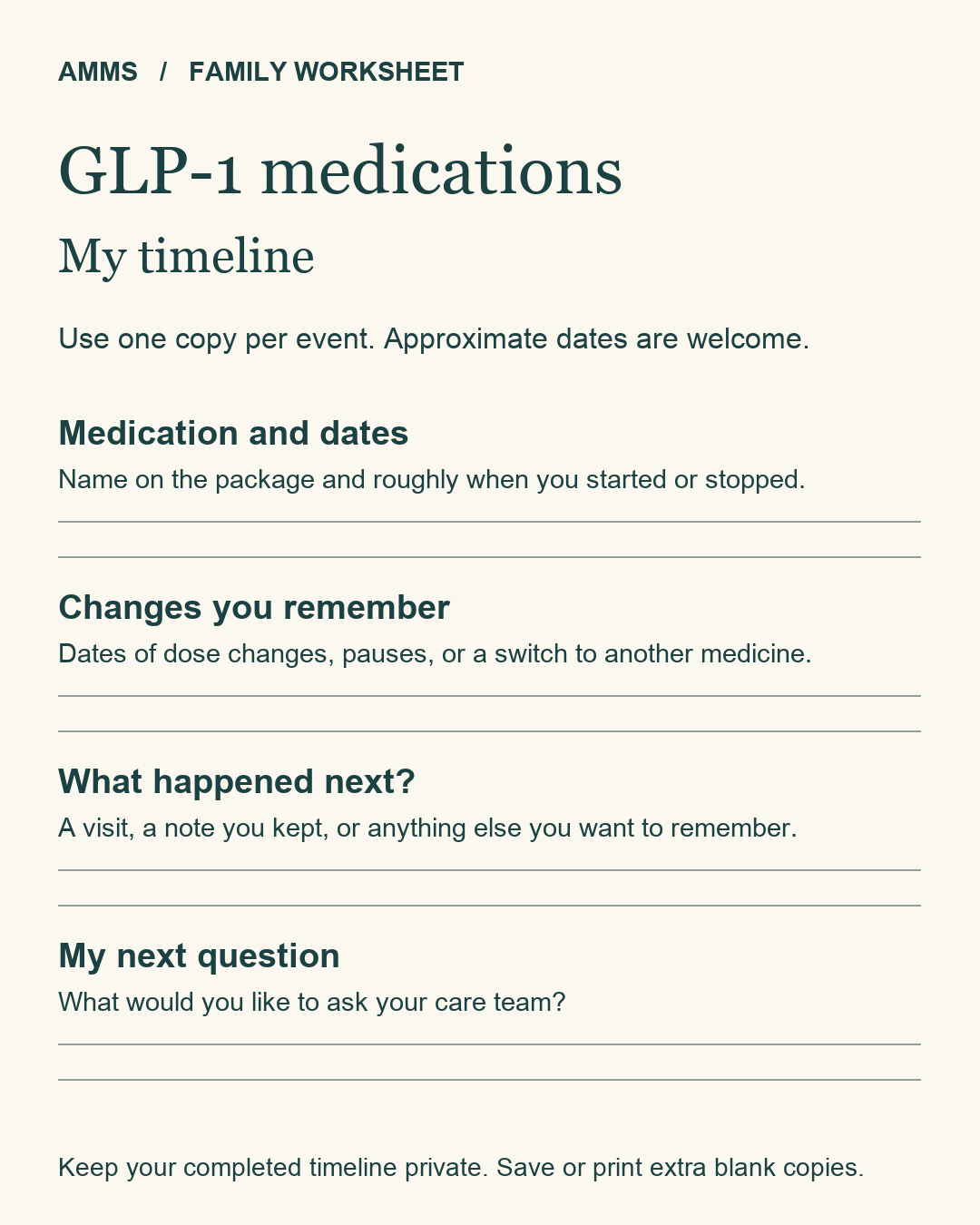
Save the blank worksheet and fill it in privately.
Review the supporting information below before or after completing the private campaign form.
Official and authoritative background links used for intake education.
A practical checklist to help organize useful details before review.
Reviewed for intake accuracy by AMMS Compliance Team
These official references are provided for background education only. They do not replace medical or legal advice.
Share your contact details and answer the existing campaign-specific questions.
Gather the records, dates, communications, and other details listed for this campaign.
AMMS or an authorized intake partner may contact you for missing or clarifying details.
Qualified legal professionals decide whether a claim can move forward. AMMS does not provide legal advice or guarantee results.
No. Labeling describes approved uses and reported risks. Medical causation and legal eligibility require individual review by qualified professionals.
Do not stop or change a prescription without speaking with your healthcare professional.